Search This Blog

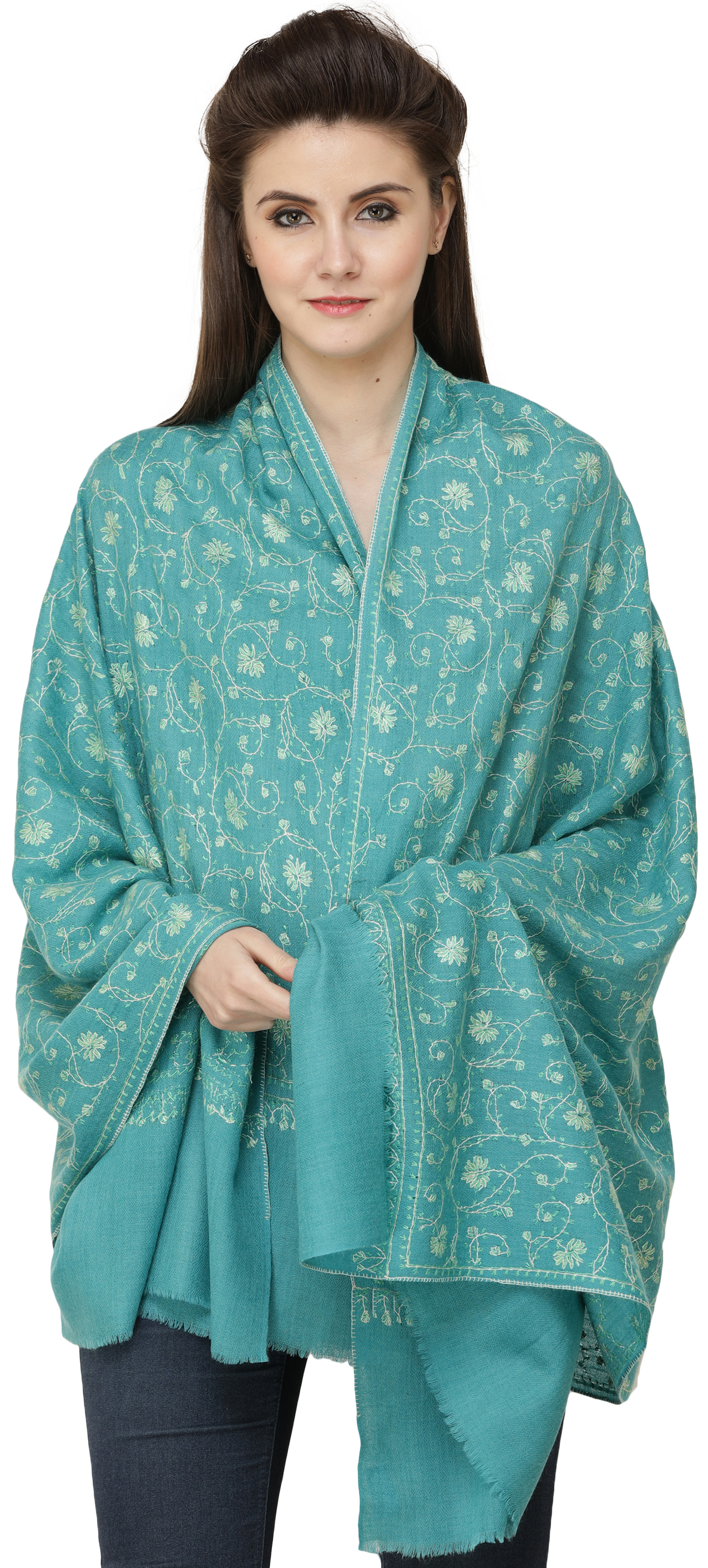
Blue-Coral Kashmiri Robe

The Kashmiri artisan's way with crewelwork makes for striking results. From the continuous chain stitches one could observe by zooming in on the motifs to the signature color palette of natural pastels, ari embroidery is instantaneously recognizable and inimitable. 

Kashmiri Robe 


 It finds its way into most of the much-coveted produce of the region, from shawls and stoles to jackets and sarees, and is the very picture of Kashmiri embroidered and traditional elegance. Indeed this one-of-a-kind robe is for those of us for whom glamour is a habit.

Jet-Black Stole from Kashmir

The stolen picture is the Cashmir itself. This glamorous stole was made out of top class wools of the homegrown type and was decorated with a assertion black base and luxuriously embroidered with floral and faunal motifs bizarre to the valley. 

Jet-Black Stole


The shade palette of the prosperous ariwork in the foreground is a mixture of heat neutrals and minimal herbal pastels. This variety of sticking is endémic in Cashmir, beginning with crewwork method in the shades and motifs used. The stylised and sophisticated arcades add jazz to this stolen usual chic. 

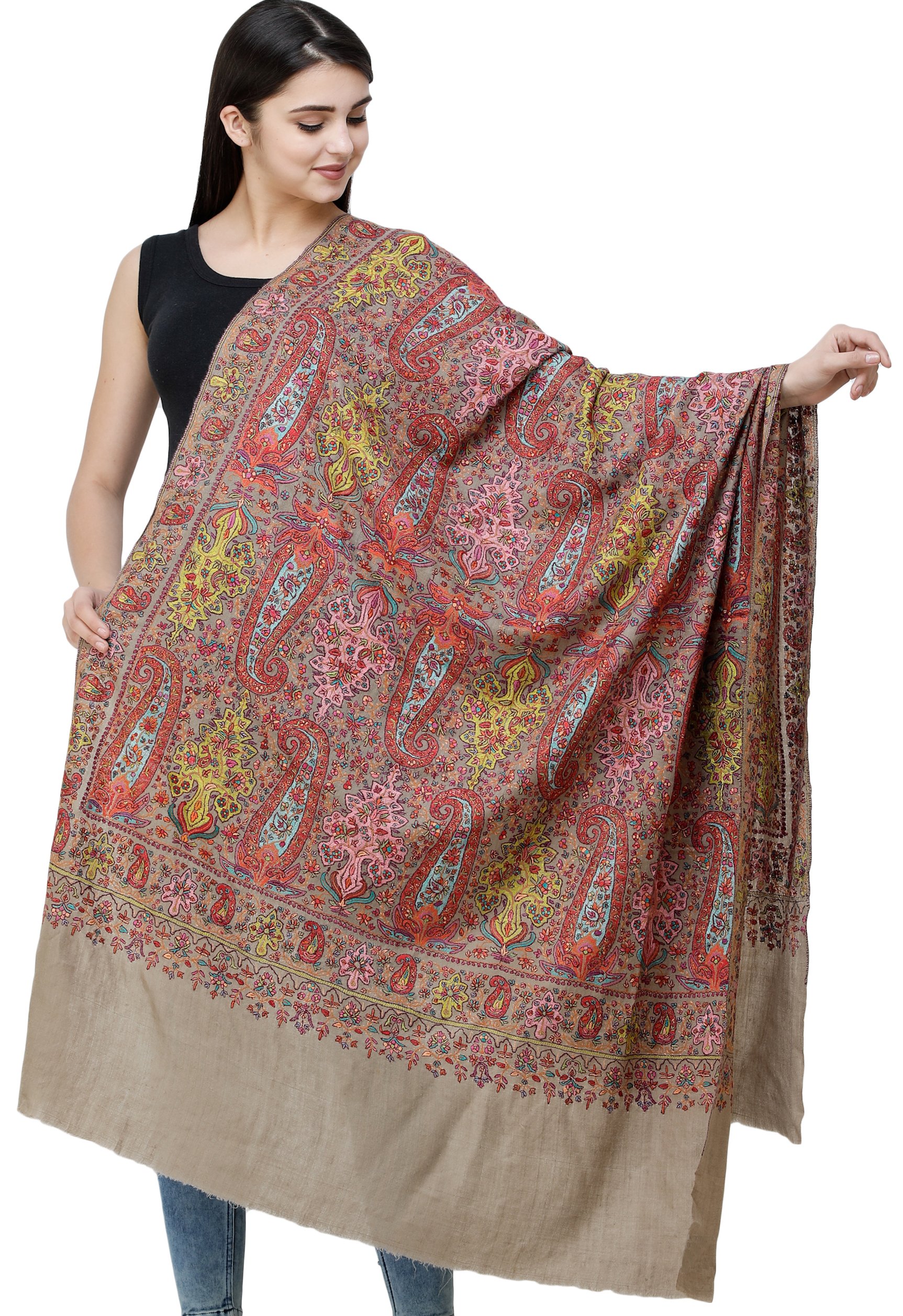
Sozni Embroidered Paisleys Shawl

The appeal of Pashmina is unrivaled. This spectacular shawl, dyed by the darkness of Kashmir's night skis, is a great example of oriental charm. Derived from the Persian word “Pashum” for softness, pashmina yarn is spun from the naturally depigmented hair of Tibetan and Ladakh's native Changra goats.
pashmina Paisleys Shawl


The skills required to use such carefully selected yarns (dyeing, weaving, embroidery with various techniques, etc.) are handed down to the local Kashmir craftsmen of the previous generation. Zoom in on this shawl's gorgeous paisley to understand the intricacies of ancient embroidery techniques.

Intricate Sozni Embroidered Paisleys Pashmina Handloom Shawl

This solid-colored pashmina is fit for a queen. The rich color of moist earth becomes the fabric like no other neutral. Because pashminas have traditionally been woven in a statement, feminine colors, this one is sure to stand out. An infusion of pretty pastels characterizes the embroidered panels along the edges, which complement the field color. 
Pashmina Handloom Shawl

A single work of pashmina such as this one takes weeks, if not months, of labour to be finished, making these shawls as desirable they are the world over

Tussar is one of the signature silks produced in the subcontinent. Its inimitable cream ivory colour makes it easily distinguishable, not to mention its relatively rugged texture. The saree you see on this page is a tussar silk  number handpicked from Bengal.
Sand Tussar Sari
It is the Kantha embroidery that dominates the border and pallu that gives personality to this saree. Kantha is the term for fabrics finished with running stitches done by hand, a technique perfected by Bengali women seeking to recycle old fabrics lying around the house.
Tussar Sari 

The motif chosen is of a wedding procession, stitched repetitively in rows along the fabric. This would be a great saree to wear to daytime gatherings such as on casual luncheons with family and shopping trips with friends.

Gorgeous ballgown-esque Anarkali suit

This gorgeous ballgown-esque Anarkali suit is just the thing to wear to parties and gatherings with a traditional spin. The dominant black colour sets the mood of the ensemble to one of reserved and overpowering elegance. In ethnic fashion today they are typified by the accentuating bust, from which cascade volumes of floor-length skirts contained by the thick, red, richly embroidered hemline.


Anarkali suit
The signature bust comprises of black meshwork over a fiery red, more of which is to be found in the embroidery on the full sleeves. Luxuriant patches of zardosi punctuate the ensemble at the waist, along the neckline, down the bust, and at the hems of the sleeves. Zoom in on the same to appreciate the beauty of the Persian-origin silverwork.

Sage-Green Floor-Length Anarkali Suit

The luscious silk make of this Indian suit is of a glade-green colour and layered with ample proportions of tulle. Monotone vine embroidery graces the fitted bust from the neckline downwards, and spreads out along the length of the translucent sleeves.


Sage-Green Floor-Length Anarkali Suit

The voluminous skirt is the most statement-making aspect of the ensemble, the weight of the dense embroidery near the hemline adding to the signature fall.
                                                        Anarkali Dresses 


Simple choodidar trousers and an unassuming dupatta complement the gorgeous Anarkali kameez.


Designer Cholis -Collection of Ethinic wear


A (choli) blouse can add a stylish appeal to the sari which is either stitched or readymade. The back of the blouse or choli and the design of the neck are of utmost importance at the time of deciding the pattern of the blouse. These can be designed with thick embroidery to cater to the need of the sari. Selecting of a blouse's colour should be done while taking into consideration the skin tone of a woman.

The common types of blouses include halter necks and noodle straps which have numerous variations and can be varied in terms of fabric and colour. These are made especially for festive occasions. Another is the airhostess blouse which is covered at the back and has buttons or hook in front, adding a graceful appeal to the wearer.


Desert-Dust Designer Choli from


Sleeveless cholis have recently gained popularity as they provide comfort during summer and can be worn with chiffon and cotton saris. Different designs and cut of neckline is very much in demand. Backless sari blouse has evolved completely from being made in long sleeves to short sleeves. For adding a traditional look to these blouses work of zari, gota or sequins can be made. These are most expensive blouses.

 
The designer blouses which have been popular among women include-
Structured cholis - these are the most commonly used style as it provides comfort and versatility. These blouses have an eye catching design and act as an accentuation which perfectly fits for every occasion.

Everglade Backless Choli

Smock blouses- these blouses are made with a V-neckline along with waist in smock style which is perfect for modern women.
Carni blouse- these blouses have a meek look which is embedded with complicated and bold designs. Attention and compliments are sure for the women wearing it.
Ruffled cholis - these are a sophisticated and elegant piece of designer wear which are perfect with long sleeves.

Regardless of the period or fashion trend a choli is considered as a most popular staple of a woman's wardrobe. It adds a priceless addition to the image and style of a woman. It can be worn for occasions, leisure, business or pleasure. Fashion trends with regards to the sari blouses change with time.

Selection of these cholis  depends on the figure of the woman wearing it. Square or circular neck blouses are best suited for taller women. Shorter women should opt for rectangular or oval shape neck blouses. Women with long and thin neck should choose high collar blouses but should refrain from wearing U-shaped or V-shaped neck style.

Halter neck blouses and spaghetti strap blouses are stylish and fashionable which suits thin women. Short and thick neck women should go for V neck as these are classic designs which can make them look slimmer. For a traditional look the blouse should be made in long sleeves and which goes well with all kinds of saris.

Spiritual Materialism

Materialism isn't related with spirituality, yet it has turned out to be progressively typical. Also, Buddhist instructors alert understudies about the risks of bringing material things into their routine with regards to following Buddhism. In his book, 'Slicing Through Spiritual Materialism', Chögyam Trungpa, the
Tibetan Buddhist sculpture ace, authored the term 'spiritual materialism'. In detail, he clarified how botches are being made by the individuals who practice Buddhism of their spirituality to help their singularity, indicating that it is a type of personality getting a handle on.

The majority of the unexpected, it appears that our spiritual practice that was once intended to limit our egocentricity is presently powered by materialism with pendants and statues. This can happen effectively by communicating our spiritual experience and investing heavily in showing those encounters with spiritual stuff.

Or then again are people encircle themselves with innate gems, for example, arm ornaments, studs, pendants, and rings for individual harmony and fulfillment? Decorations, for example, are found in an assortment of jewels and metals, the portrayal of various human advancements. Every one of them is a hallowed image that speaks to things, for example, richness, nourishment, great karma and karma, wellbeing, and triumph. The workmanship, material, and modernity used to make them just increase the value of it. A portion of the things we discover individuals wearing every ha a particular significance and reason, for example, these:


RINGS 

A gold ring is worn on the ring finger speaks to a profound significance, for example, divine vitality. It is accepted to draw in heavenly awareness which and the weight that is made on the finger dispenses with the obstacles of dark vitality. The conviction of the pressure point massage that is made is useful for the wearer's wellbeing. Customarily, it is worn on the correct hand by men and the left hand of ladies.

PENDANTS 


The individual who wears a Buddha pendant around the neck draws in positive vitality. They discharge positive waves into the earth around them. The conviction is the majority of the whole antagonism is crushed and a battling soul is created inside the individual.

MEANINGS OF BUDDHA 

Wearing a Buddha pendant of any style can have various implications for the individual wearing it. The kind of diamonds and materials used to make the pendant may have its own specific religious significance too. By picking the image that is directly for you in the correct extent is significant.


Blue-Ribbon Brocaded Lehenga in Multicolor Thread Weaving with Embroidered Choli and Pink Dupatta

For those of us who are not used to the perplexing wrap of the saree, the lehenga is a fine substitute. It has all the conventional lavishness of, state, a Banarasi or a Baluchari silk, and has been incredible most loved with present day ladies who need to accomplish a look that is extraordinary and magnificent. The lehenga involves three pieces - a long freely streaming skirt, a choli, and an abundant odhni. The outfit you see on this page is packed with each of the three formed from unadulterated homegrown silk. The skirt adds the most identity to a lehenga troupe, and the one you see on this page would make you the topic of discussions all over the place.

Blue-Ribbon Brocaded Lehenga in Multicolor 

The adequate creases alone would own this an expression expansion to your closet or even trousseau. Abundant brocade-work graces its lovely length, filled in with a complete assortment of themes - gold ringlets with paisleys against the dull blue of the establishment, an implantation of petals in beautiful marriage pinks and oranges, and boards of lilies and lotuses in coordinating hues right down to the trim. The choli has comparative gold themes in coordinating dim blue. The mark pink dupatta supplements the base shade of the lehenga. It is so long it achieves the trim of the skirt, while the translucent silk it is produced using is colored a shading no lady or lady of the hour could turn out badly with.

Tango-Red Stole from Kashmir

Layering could change the whole state of mind of a troupe. Pick this stole for a down to earth yet beauteous bit of layering. An incomparably ravishing red for the establishment shading makes this the ideal expansion to one's trousseau or an announcement expansion to one's closet. The style and sensousness of a Kashmiri woolen is undeniable. An announcement making base shading, high-exactness weaving that is additionally endemic to the valley (ari, for this situation), and an atmosphere of the lofty about the minute you put it on. From the monotone tufts along the edges to the common shading palette utilized for the weaving, everything about this stole is overwhelmingly lovely and coquettish.


Ari Hand-Embroidered Flowers


It is formed from the unadulterated homegrown fleeces, and is a fine case of the exceedingly pined for Kashmiri handiwork. Indications of the last could be gathered by focusing in on the lush, lavishly shaded ari weaving that commands the closer view. Group this with your choicest Indian suit or saree, ideally an impartial hued one that is low on the weaving, so as to draw out the best of this number. Such a stole would serve to keep you warm yet stylish looking when the celebrations run a touch late into the night.

Salwar Kameez Art Silk

The Anarkali-style suit is the Indian version of the western ball-gown. Long and flowing and characterised by voluminous skirts, it is an ensemble fit for no less than a queen. The dress you see on this page is one such Indian Anarkali suit comprising of trousers, dupatta, and a dress-kameez to-die-for. The colour is a soft pale gray that makes for a feminine statement. It brings out the glittering gold of the booties printed along the length of the skirt. Its hem is adorned with dual panels of embroidered gold lace. Note the ample pleats that the skirts of this dress have been gathered in, and how gorgeous it would look as you motion.


It is no wonder that the dupatta is a relatively simple strip of silken fabric; after all, with Anarkali-style suits it is the kameez that is designed to be the showstopping element. It has a miniscule pastel-coloured trim at the hem, and a bunch of tiny white booties spaced out across the field. This Indian suit comes with signature choodidar trousers in matching gray colour. The USP of the ensemble lies in the long-sleeved, beautiful seamed bust. From its high, soft round neck emerges a strip of golden discs of varying sizes that lies in a semicircle over the bust, enclosing more of the printed gold booties.

Place for Indian Art in the Modern World


Indian art walked much ahead of corporate India before world took notice of it’s glorious background. There is none denying the fact about the richness of Indian art. During the last decade when India was making strides and became confident of its bright future, Indian art was making a silent statement across the globe. Today, Indian art is witnessing exponential growth both culturally and commercially. As Indian art made a strong statement locally and internationally yet certain art forms are on the verge of extinction.


Over the years, Indian art has been in a transition period. Be it ancient art of temple and sculptures or ancient tribal art, art by darbar artists in courts of kings, Mughal and British periods and post independence period, it has grown without giving up its own uniqueness and at the same time striking with an impact at the international platform. There is considerable demand of Indian art globally as contemporary Indian art shows rare kind of maturity and high degree of sophistication which has attracted many art lovers, collectors, artists and critics alike. With each work depicting a lot and saying a lot to the viewer.

History of Indian Art is as old as the Indian civilization and no wonder the strides made by Indian art is making every Indian proud. It is not merely the number of Indian artist who have been dominating art world. India has been a hosting point of different cultures and has been influenced and yet survived its uniqueness by blending new influences. If one takes a close look at contemporary Indian art, one will not find any distinction between paintings, assemblages, installations, collages and sculptures as Indian artists with new level of energy are exploring all available mediums.
Talking of how Indian art has managed to immerge from the grounds, Internet has played a major role in promoting it. These days you can find all types of traditional and ethnic paintings, articles, statues, sculptures, ethnic or tribal jewelry  and much more. You can find much exclusive items that too at various price brackets. There are art works for various prices you can offer. So, it’s not just some number of art work being sold at higher price tags. You can Buy Buddha Statues Online  or any other form of art that pleases you from the online shopping portals when you want to make your living room look unique than the rest.
As a result of globalization of world economy during the last decade, support base for Indian art has also increased. Apart from supporting business houses, government agencies, and royal rich families, discerning Indian middle class which also benefited from economic growth has been supporting Indian art in a big way. Some people have given their all to prevent the heritage from going into the dust and have successfully been able to keep it alive. If people keep taking interest in the Indian art in this pattern it is not hard to say Indian traditional art will be back on track with a boom. It is expected that Indian art will be more at ease in experimenting and breaking new grounds in the coming years.


Things to consider when buying Pashmina shawls or scarves


Derived from the underbelly of the famed Himalayan Mountain Goats found in Kashmir valley, the Pashmina shawl is beauty, elegance, comfort and luxury all rolled into one. Extremely soft and silky in its texture, these shawls are made of a perfect mixture of silk and cashmere wool, and are durable enough for daily wear. So if you are considering in investing in a Pashmina shawl or scarf, here are some essential pointers to consider before buying one.


Differentiate between the Real and Fake

A lot of fake Pashmina shawls are doing the rounds in the market. So make sure you opt for only genuine Pashmina stuff that would be worth the money you spend on them. A fake Pashmina shawl would clearly not exhibit the characteristics of a real one, meaning it would not be durable, would not be able to retain heat properly and would not have proper shape.


A good way to check the authenticity of Pashmina shawl is to check the item description on the label. If you find any item like acrylic, viscose or polyester in the description, then it is not a genuine product.


Understand Cashmere and Silk Percentage

In addition to cashmere wool, a Pashmina  shawl or scraf would ideally have at least 20% of silk added to it for that extra softness and silkiness. However, if too much silk is added, the product would become more fragile and less durable. So understand how you would want to use the shawl before buying it. If you intend to wear it every day, invest in a shawl with less silk percentage. However, if you intend to wear it occasionally, opt for one with more silk. Again, if you are buying a Pashmina shawl with more silk added to it (70/30 mix), you need to avoid wearing certain types of clothes, jewelry and accessories that could pull the threads and create small holes in the fabric.

Size Matters
Just because it is a shawl doesn’t mean you can go for any size and then simply drape it around your body. You would need to choose the size of the shawl depending on how you plan to use it. Explore for Pashmina shawls in all sizes.


For instance, if you want to use the shawl as a fashion accessory, then consider investing in a small scarf. If you want to use it to keep you warm in cold weather conditions, then opt for the wrap type shawl. Then again, if you intend to wear it around your neck for the most part, choose sizes from (http://www.exoticindiaart.com) that can be easily wrapped around your neck several times over.

Set your Budget

The cost of a Pashmina shawl would be directly proportional to its quality. So make sure you know how much you want to spend on the shawl or scarf beforehand. This would help you narrow your choices down to a handful few from which you can select the shawl that best suits your style and serves the purpose.


Kashmiri Pashmina Shawls: Exquisitely Crafted for Elegance and Style


Kashmir is known for its natural beauty and wonderful arts and culture. It is also known for its stunning Pashmina clothing accessories such as scarves, wraps, stoles or shawls. Pashmina fabric includes 100 percent pure Pashmina. Other types of shawls include 80% Pashmina and 20% silk blend. The 70/30 blend is also commonly used in some cases. Infusion of silk into the Pashmina makes it softer and shinier. Pashmina shawls are any ways known for their fleecy softness and amazing warmth. It was during the mid 1990s that Pashmina shawls became highly prized so the demand exceeded supply. But while Pashmina shawls rose into prominence during this period, they have now become an eternal style statement.

Pashmina Stole from Kashmir with Ari-Embroidered Flower Vines


Cashmere used for Pashmina is made from the finest quality. Pure Pashmina as well as Pashmina blended with silk creates the perfect look for any formal or informal occasion. Pashmina and silk scarves, shawls and stoles are beautifully crafted, finished, appraised and delivered to your doorstep if you choose a good online retail store. Pashmina is sourced from the Himalayan slopes from the Capra Hircus goat. The cashmere used for making Pashmina is soft and luxurious. The Kashmir valley is known all over the world for its shawls. These shawls include not only the Pashmina but also the shahtoosh and the wool. Based on the kind of fabrics used, these shawls offer different types of advantages.
  Silver-Mink Pure Pashmina Handloom Shawl from Kashmir with Sozni Floral Embroidery

While Kashmiri woolen shawls are the most affordable and Shahtoosh shawls are extremely expensive, the Pashmina falls in between the two in terms of cost. Pashmina shawls from Kashmir have beautiful embroidery work on them and they are one of the most well known items sold in this state. Pashmina shawls have certain exquisite embroidery including Sozni, Papier-mâche and Aari. Sozni embroidery involves the use of needle and thread to create beautiful patterns on the sides of the shawls. The motifs used for the embroidery include abstract designs and stylized Paisleys and flowers in colorful and attractive patterns. Papier-mâche involve the use of needlework on broad panels on either side of the shawl or across its entire surface. The flower and leaf motifs on this type of Pashmina (http://www.fws.gov/lab/idnotes/shahtoosh-web.pdf) shawl is outlined in black. Ari is a hook type embroidery which uses flowers as motifs. In fact, an overriding feature of all Pashmina shawls is that they generally have flower motifs. The beauty of a Pashmina shawl cannot be denied.

The look of these Pashmina shawls is so enticing that customers will be amazed by the sheer variety offered at online (http://quartsoft.com/blog/201303/top-online-shopping-benefits) retail stores. Pashmina shawls, stoles and scarves are a once in a lifetime acquisition. They also make for the perfect gifts for birthdays and wedding anniversaries. A Pashmina shawl is also a very thoughtful gift especially during the winter time. Light Pashmina silk stoles and scarves also make for the perfect style statement. These accessories can be used alongside Indian as well as Western wear. Pashmina shawls can also be paired with everything from coats and jeans to silk saris. Choose and buy Pashmina shawls online (http://www.exoticindiaart.com/textiles/StolesandShawls/pashmina/) for attaining a look that breathes refinement and elegance.

Resource Box:
No matter if you want to buy turquoise jewelry (http://www.exoticindiaart.com/jewelry/turquoise/) or a beautiful Pashmina shawl, Exotic India has the best collection.